
Understanding the DISC Framework: A Practical Guide to Behavior and Communication
Take DISC Personality Profile Test
Get StartedWhat the DISC Framework Measures and Why It Matters
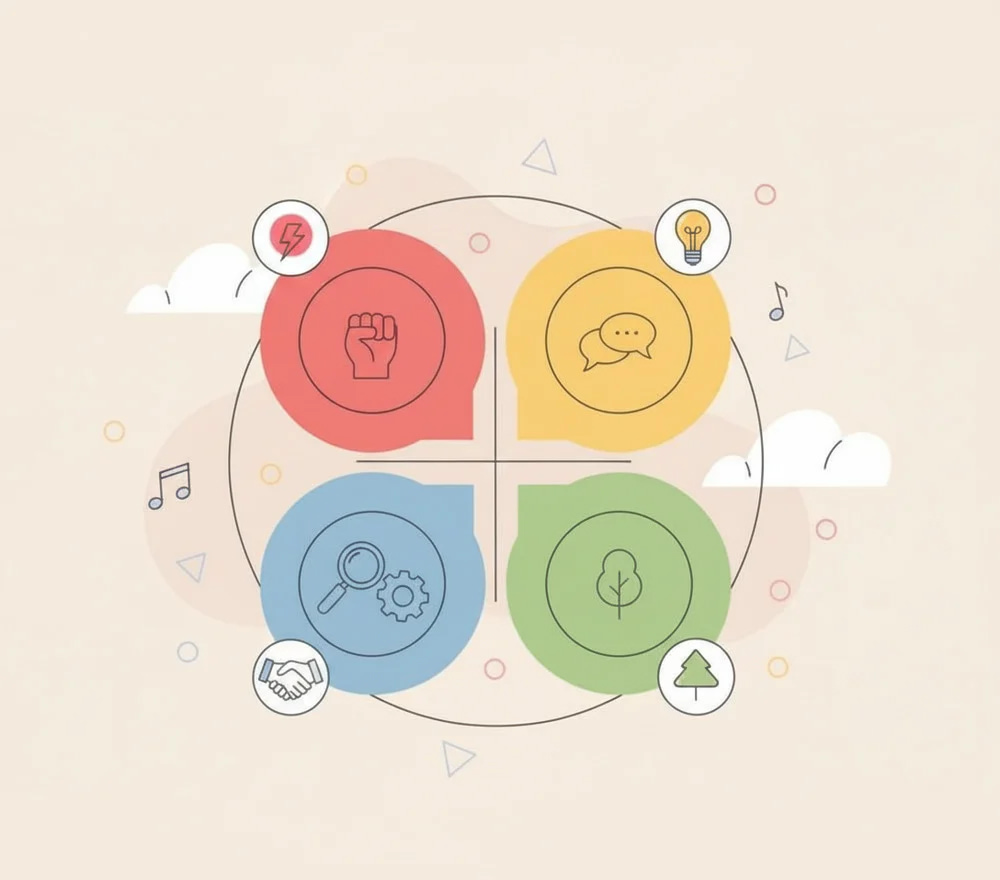
The DISC framework explains observable behaviors using four dimensions: Dominance, Influence, Steadiness, and Conscientiousness. Rather than labeling people, this approach helps translate preferences into practical choices about communication, pace, and decision-making. Leaders use it to reduce friction, while individuals apply it to navigate collaborations and present ideas more effectively. The model is descriptive, not predictive, and it thrives when combined with context, coaching, and reflection. Across industries, organizations adopt it to create a shared language that demystifies why two skilled colleagues might still talk past one another.
In practice, the instrument offers a structured snapshot of tendencies that show up under pressure or routine. For quick screening, many HR teams use a DISC test alongside interviews to map communication preferences and reduce mismatches. Because results hinge on self-reporting, facilitators emphasize honest responses, not idealized ones, so that insights mirror real-world behavior rather than wishful thinking.
Adoption succeeds when stakeholders know how to use the findings responsibly. When decisions affect safety or compliance, an organization typically relies on a validated DISC assessment test to maintain rigor and ensure ethical implementation. Clear norms around confidentiality, informed consent, and feedback methods keep the process constructive and psychologically safe.
How the Model Works: Dimensions, Patterns, and Results Interpretation
Each profile blends the four factors to form recognizable patterns. People high in Dominance tend to act decisively and value results, while those high in Influence energize groups and inspire action. Steadiness often shows up as patience and support, and Conscientiousness focuses on accuracy and process. Reports typically visualize these tendencies with graphs or narratives, translating raw scores into everyday language. The most useful takeaway is recognizing how your default style lands on others and what to flex when the situation demands something different.
Access options range from enterprise-grade platforms to introductory tools used in classrooms and community workshops. If you are exploring with no budget, you can try a reputable DISC personality test free version to sample the experience and learn foundational terms. Paid versions usually unlock deeper analytics, custom tips, and role-specific guidance that make adoption smoother in complex environments.
Organizations often start small and then scale after validating usability with a pilot. Educators often pilot the tool using a DISC test for free offer before rolling out a full program across departments. Consistent debriefs, short practice drills, and scenario role-plays reinforce learning so that insights stick beyond the excitement of initial results.
Practical Benefits for Managers, Teams, and Career Growth
The framework pays off when it informs daily habits. Managers align assignments with strengths, set meeting norms that give every style airtime, and tailor feedback so it lands with clarity instead of friction. Teams reduce rework by agreeing on decision rules and handoff checklists that reflect diverse preferences. Individuals use insights to prepare for high-stakes conversations, regulate pressure responses, and select development goals that unlock visible performance gains. Career planning also benefits because people can spot roles that match their natural energy while building agility in weaker areas.
Coaches integrate insights into onboarding, leadership programs, and peer mentoring to accelerate trust. For coaching sessions, a DISC profile test summary accelerates rapport because it spotlights shared preferences without stereotyping. Ongoing practice matters more than the initial report, so teams schedule short “style check-ins” to refine norms as projects evolve and stakes rise.
Labels should be used as starting points, not ceilings. Newcomers sometimes misread labels in the DISC test personality overview and assume they are fixed traits rather than adaptable behaviors. The most effective practitioners reinforce that style awareness expands your range, helping you choose responses that fit the audience, context, and goal.
- Clarify expectations quickly with shared behavioral language.
- Reduce friction by adjusting pace, detail, and decision styles.
- Elevate meetings through explicit norms and role clarity.
- Improve feedback quality with tailored wording and timing.
- Support onboarding by mapping team dynamics for new hires.
Ethics, Accuracy, and Best Practices When Taking Assessments
Ethical use starts with purpose: developmental goals trump gatekeeping, and transparency beats surprise testing. Participants should know how data will be stored, who can view it, and how long it will be retained. Administrators must follow publisher guidelines, avoid forced interpretations, and never reduce people to single-letter labels. Complement results with interviews, work samples, and 360 feedback to counter self-report biases. Above all, make participation voluntary when possible and always provide a respectful debrief that invites reflection and questions.
Cost shouldn't be a barrier to entry, especially for education and community programs. To minimize barriers for students, some schools adopt a DISC assessment test free pilot during career weeks so learners can practice self-awareness without financial hurdles. Facilitators then layer advanced tools for those who need detailed coaching or leadership tracks.
Quality improves when practitioners rehearse the process before scaling. Before committing to certification, practitioners often practice with a DISC model test to verify scoring workflows and refine debrief scripts. Clear documentation, feedback templates, and sample case studies help maintain consistency as usage expands across teams.
Comparison of Styles and Use Cases
Clarity increases when you can compare styles at a glance and link them to practical behaviors. For example, a decisive colleague might appreciate concise bullet points and clear ownership, while a methodical teammate prefers step-by-step documentation and time to validate assumptions. When a team agrees on these differences, cross-functional work moves faster, with fewer misunderstandings and less rework. Nonprofits, schools, startups, and enterprises all benefit when the language of behavior becomes a routine part of planning, feedback, and execution.
| Dimension | Core Drive | Communication Tip | Ideal Contribution |
|---|---|---|---|
| Dominance | Results and speed | Be direct, present choices | Decisive moves in ambiguity |
| Influence | Connection and impact | Share vision, invite input | Momentum through advocacy |
| Steadiness | Stability and support | Offer context, allow pause | Reliable execution and harmony |
| Conscientiousness | Accuracy and standards | Provide data, define criteria | Quality control and risk reduction |
Pilots can begin small and iterate rapidly to fit local culture and workflow rhythm. Nonprofits running workshops may start with a DISC model test free sample to engage volunteers and gather feedback for curriculum tweaks. Distributed teams benefit from a DISC test online option that auto-generates reports instantly and supports remote debriefs with interactive visuals.
FAQ: Common Questions
Is this framework a personality test or a behavioral tool?
It is primarily a behavioral lens rather than a deep personality inventory, focusing on observable preferences and communication patterns. The best use is developmental: practice new behaviors, gather feedback, and refine habits. When deeper insights are required, analysts schedule a DISC analysis test with enhanced scales rather than basic screenings, and they combine results with interviews for fuller context.
Can results change over time?
Scores can shift with role demands, life events, and intentional practice. People often broaden their range as they gain experience, especially when work context requires more precision, faster pace, or greater collaboration than before. Changes tend to reflect situational adaptation rather than a complete transformation of your underlying tendencies.
How should managers introduce this tool to a team?
Start with clear purpose, voluntary participation, and psychological safety. Explain how results will be used, and set norms for respectful dialogue that avoids stereotypes. Introduce short activities that translate insights into daily routines, such as meeting protocols, handoff checklists, and feedback scripts that match audience needs.
What if I only need a quick snapshot for self-awareness?
A concise overview can still be useful if you pair it with reflection and simple action steps. If you are short on time, a brief DISC type test gives a snapshot without advanced sub-factors, and you can revisit a longer assessment later. Keep notes on what resonated so you can track progress and identify patterns across projects.
How do I get the most value from my report?
Translate insights into 30-day experiments: tweak your email tone, adjust meeting asks, or vary the level of detail in proposals. Ask trusted peers for feedback on those experiments and iterate quickly. The compounding effect of small behavioral shifts is what turns a static report into measurable performance gains.