
A Practical Guide to the DISC Model for Work and Life
Take DISC Personality Profile Test
Get StartedWhat the DISC Model Explains About Behavior and Communication
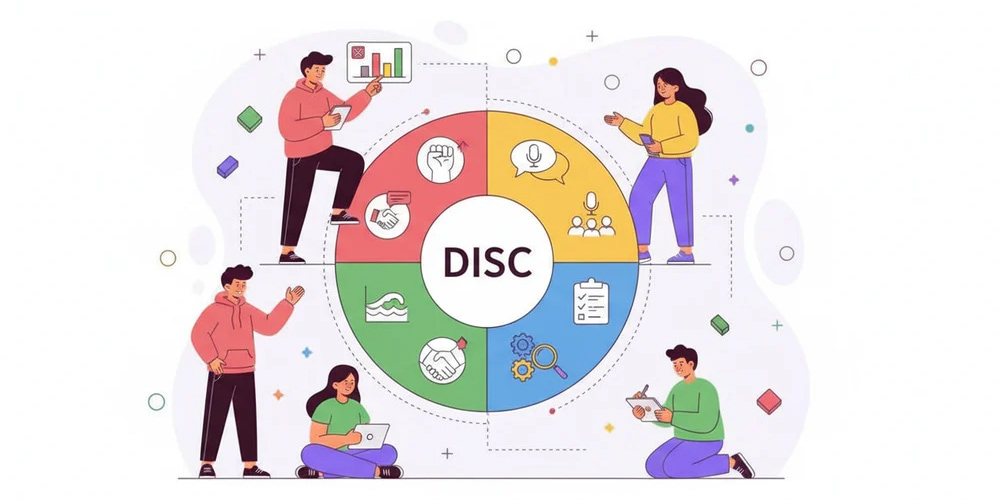
People notice patterns in how colleagues make decisions, handle conflict, and influence others, and those patterns are not random. The DISC model turns that intuition into a clear, teachable language that maps observable behavior into four primary tendencies: Dominance, Influence, Steadiness, and Conscientiousness. Rather than boxing people in, this framework highlights what energizes an individual, how they prefer to collaborate, and what situations may drain their capacity. When teams share a common map for these tendencies, meetings run smoothly, feedback is less personal, and change efforts face less friction.
Leaders often want a reliable, ethical way to make sense of style differences without resorting to stereotypes or guesswork. In that context, the DISC personality assessment offers a structured snapshot that translates answers into practical narratives, coaching tips, and development priorities. Used responsibly, that snapshot provides a bridge between intent and impact, helping people refine behaviors while honoring their core strengths. The best outcomes appear when results become part of everyday conversations rather than a one-time exercise.
Teams benefit when they can anticipate predictable stress responses, preferred pacing, and comfort zones during collaboration. Within that shared language, the phrase DISC personality signals a focus on what can be seen and heard in real interactions, not private motives or clinical diagnoses. Practical implications abound, from tailoring one-on-ones to engineering project roles that align with natural tendencies. Over time, this approach reduces avoidable conflict and increases accountability because expectations become explicit.
- Common map: A neutral vocabulary makes difficult conversations easier.
- Faster onboarding: New hires grasp team norms through clear style cues.
- Better meetings: Agendas flex for pace, detail, and participation needs.
- Healthier feedback: Observations shift from judgment to behavior.
How Evaluation, Profiling, and Questionnaires Work
Modern instruments translate choices into style patterns using transparent scoring rules and norm groups. Behind the scenes, algorithms weigh responses to capture intensity, adaptability, and likely stress behavior across the four dimensions. With that in mind, organizations often turn to DISC personality profiling to standardize language across departments, making cross-functional projects far more predictable. The value grows when debriefs include real scenarios, not just generic type descriptions, and when managers model the language daily.
Measurement quality matters, so look for instruments with documented validity, reliability, and clear interpretive limits. Good practice involves training facilitators to avoid labeling and to focus on behaviors that can flex under different demands. For enterprise rollouts, governance should define how DISC personality profile testing data is stored, who can access reports, and how insights translate into development plans. Transparent policies build trust and encourage people to use results as a springboard for growth.
Question formats vary, from forced-choice items to Likert scales, each with trade-offs in precision and user experience. Well-written items avoid leading language, cultural bias, and jargon, focusing on observable preferences that show up during real work. To keep the experience clear and user-friendly, the structured DISC personality test questionnaire presents balanced options that minimize response distortion and fatigue. Clear instructions and time guidance reduce anxiety and produce more consistent data for coaches and managers.
- Use trained facilitators who emphasize strengths and stretch strategies.
- Combine results with role requirements and real performance data.
- Refresh insights during transitions, promotions, and team changes.
- Protect privacy and communicate data usage before testing begins.
Benefits, Use Cases, and a Quick Style Snapshot
Organizations apply DISC to leadership pipelines, sales enablement, service quality, safety culture, and change management. The payoff compounds when teams link style insights to everyday rituals, standups, retros, and feedback cadences, so learning sticks. As part of a personal development plan, a concise DISC personality profile can highlight strengths that deserve more airtime and blind spots that merit targeted practice. When managers connect those insights to goals and metrics, coaching shifts from abstract advice to concrete behavior experiments.
| Style | Core drivers | Needs | Overuse risks | Coaching tip |
|---|---|---|---|---|
| Dominance (D) | Results, speed, autonomy | Clear authority and obstacles removed | Impatience, bluntness, overcontrol | Agree on outcomes, then co-create decision rules |
| Influence (I) | Interaction, optimism, recognition | Visibility and collaborative energy | Overpromising, distractions, light follow-through | Timebox ideation and define next steps together |
| Steadiness (S) | Stability, support, harmony | Predictability and trusted relationships | Reluctance to say no, resistance to abrupt change | Preview changes early and invite paced adjustments |
| Conscientiousness (C) | Accuracy, logic, structure | Quality standards and clear criteria | Overanalysis, risk aversion, slow decisions | Agree on “good enough” and deadlines for closure |
Beyond individual reports, program success relies on manager modeling, process tweaks, and ongoing reinforcement. Training works best when participants practice role-play conversations and design experiments they can try immediately. For scaling across geographies, well-timed workshops and microlearning create momentum that feels practical and respectful. In larger transformations, leaders often bundle DISC personality assessments with coaching, peer circles, and leadership sprints to sustain behavior change.
- Sales: Align pitch flow with decision speed and detail appetite.
- Service: Calibrate tone, pace, and guidance during escalations.
- Operations: Balance precision with throughput under pressure.
- Change: Sequence communication to match tolerance for ambiguity.
Taking a DISC in Practice: Steps, Tips, and Ethics
People frequently wonder whether to start with a paid vendor or to sample the concept first. For initial familiarity and low-friction exploration, some choose a resource labeled DISC personality test free as a lightweight introduction. That quick exposure can spark curiosity, though it should be followed by a guided debrief to avoid misinterpretation. Once committed, teams can graduate to validated tools and structured coaching that anchor insights in real work.
Budget-conscious teams may pilot with lightweight options, then upgrade once stakeholders experience the value. For entry-level exposure, a beginner-friendly DISC personality types test free can help newcomers grasp the vocabulary before deeper assessments. The key is setting expectations about precision, since shorter formats may simplify nuance that matters in high-stakes contexts. Over time, continuous learning outperforms one-off events.
Remote and hybrid teams often prefer digital delivery and quick turnaround to maintain momentum. In those environments, a convenient DISC personality test online free can reduce barriers to participation while distributing insights quickly. After baseline familiarity, leaders can map results onto workflows, decision rights, and rituals so behavior change shows up in the calendar. Ethical use includes consent, confidentiality, and an emphasis on growth rather than gatekeeping.
Sound governance ensures data is used for development rather than as a simplistic filter in hiring decisions. Facilitators should reinforce that no style is “better,” and that productive teams rely on complementary strengths. Managers can encourage peer coaching, design inclusive meetings, and reward behavior experimentation that aligns with goals. When results inform practical changes to communication and workflow, engagement and performance move together.
- Set purpose, scope, and data usage before inviting participation.
- Provide a debrief that links insights to job realities and goals.
- Translate styles into meeting norms, feedback scripts, and cadences.
- Revisit results during role shifts, mergers, and strategic pivots.
FAQ: Common Questions
Is DISC a personality test or a behavior model?
DISC describes observable behavior, preferred pace, and priorities rather than clinical traits. The framework shows how someone is likely to communicate, decide, and respond to pressure in typical work situations. Practitioners emphasize flexibility, coaching, and context so people avoid labels and focus on learning.
How accurate are the results, and how often should someone retake the tool?
Results are most accurate when respondents answer for their typical work context and have enough time to reflect. For clarity around format and scope, many participants start with a structured DISC personality profile test before engaging a coach to unpack nuance. Retesting after major role changes or life events can capture meaningful shifts in behavior priorities.
Can DISC be used for hiring decisions?
The model is best used for development, onboarding, and team design rather than as a gate in selection. If used at any stage of recruiting, organizations should pair it with validated job analyses and structured interviews to avoid bias. Ethical programs separate growth conversations from hiring judgments to maintain trust.
What is the difference between styles, profiles, and types across tools?
Styles describe observable patterns, while profiles package those patterns into reports with narratives and tips. When exploring format differences, a comparative DISC personality types test can show how instruments vary in length, scoring, and interpretive depth. The most useful approach prioritizes clarity, actionability, and fit for the organization’s goals.
How should someone prepare before taking the instrument?
Plan to answer in a single sitting, think about your typical work week, and avoid overthinking individual items. Eliminating distractions and reading instructions carefully will yield a more accurate snapshot. Afterward, schedule a debrief to translate insights into tangible behavior experiments for the next month.